Quick answer
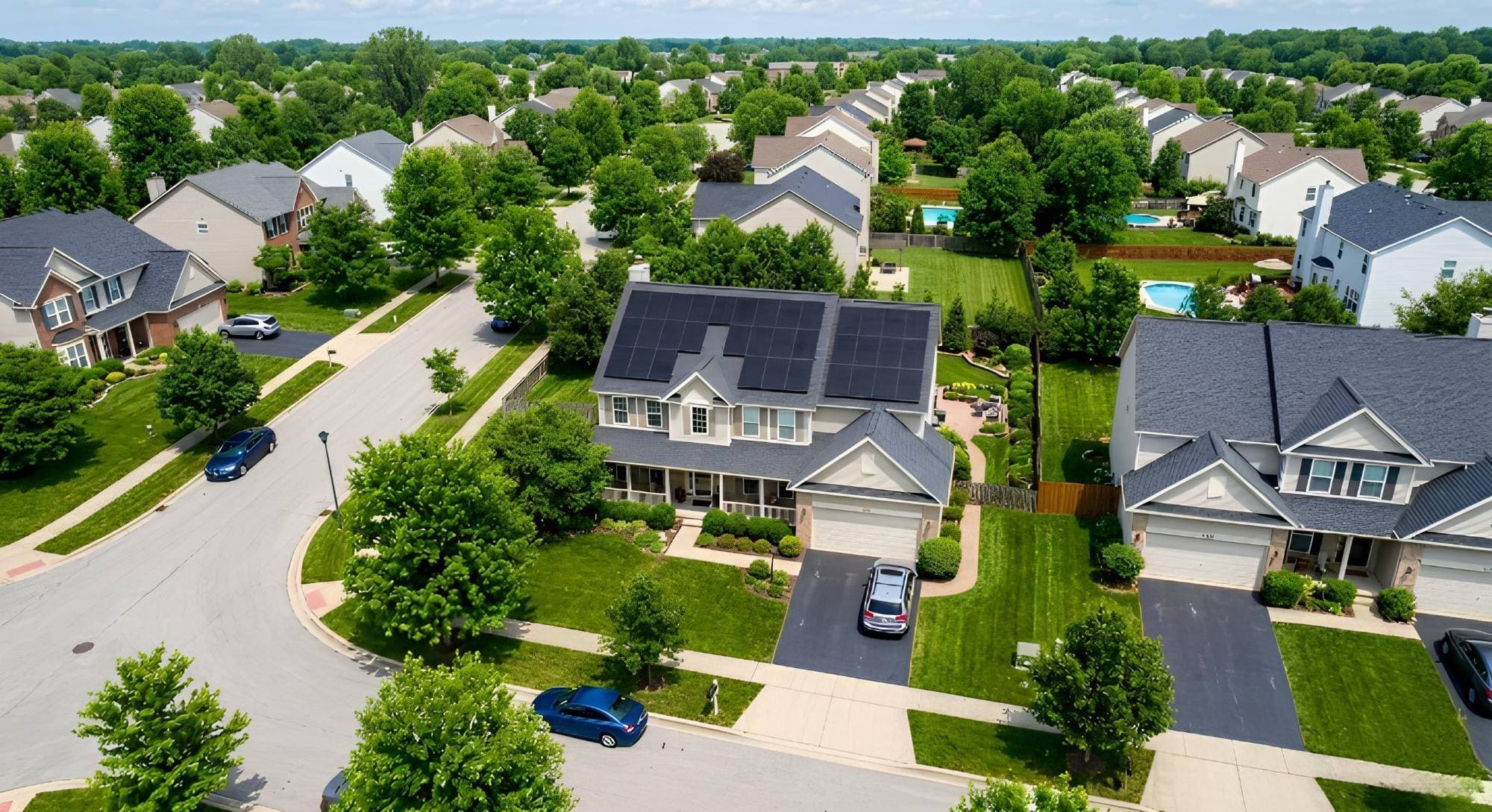
Usually yes. A National Register listing alone doesn't limit what you do with your own home, but a local landmark or historic district means a commission reviews exterior changes like solar. Chicago, Oak Park and other Illinois towns generally approve panels that can't be seen from the street: rear roof slopes, behind dormers, flat roofs behind parapets or the garage.
Does National Register listing limit solar on my home?
No. The Illinois State Historic Preservation Office says listing in the National Register does not require private owners to get approval before changing their property when they use private, city or county funds.
Local designation is different. If your home is a local landmark or sits in a local historic district, your city or village usually requires a review, often called a certificate of appropriateness, before exterior work like solar. Check which kind of designation your home has before you get quotes. In Chicago's Beverly neighborhood, for example, the larger Ridge Historic District is a National Register listing, while Longwood Drive is a Chicago Landmark district.
What do historic commissions look for?
Most Illinois commissions follow the federal Secretary of the Interior's standards. The National Park Service says solar panels in a spot that can't be seen from the ground will generally meet those standards, while an installation that hurts the property's historic character won't. Its guidelines recommend:
- Panels mounted flat or parallel to the roof to keep them low-profile
- Installations that don't damage historic roofing and can be removed later
- Rear roof slopes that aren't visible from the front of the house, keeping in mind that on a corner lot the rear may still be highly visible
How does Chicago review solar on landmark homes?
Under Chicago's solar zoning policy, panels on a designated Chicago Landmark or in a landmark district need a separate design review by the city's Historic Preservation Division, which looks at features readily visible from the public way. The Commission on Chicago Landmarks' Permit Review Committee typically approves solar with conditions: in February 2025 it required that panels not be visible from the street, and in November 2024 it set an 11-foot-5-inch setback from the front edge of a steep roof.
Chicago neighborhoods with landmark districts include the Villa District and parts of Beverly. Expect the landmark review to add time to your permit.
What are the rules in Oak Park, Evanston and other suburbs?
| Town | What the town says |
|---|---|
| Oak Park | Panels in a historic district must meet the Historic Preservation Commission's guidelines and not go on a roof slope facing the street; a designated landmark needs a certificate of appropriateness. The village says panels on rear slopes, behind dormers or on garages usually need no further historic review. |
| Evanston | Building permits for exterior work on landmarks and in local districts aren't issued until a certificate of appropriateness is approved by the Preservation Commission or the preservation planner. |
| Riverside | Exterior work on a designated landmark that needs a building permit requires a certificate of appropriateness from the Preservation Commission. |
| River Forest | Solar permits for landmarks go to the Historic Preservation Commission when the panels will be visible from the street. |
| Highland Park | Most exterior changes to its regulated historic properties need a certificate of appropriateness. |
| Elgin | Exterior alterations to landmarks and historic district properties need approval from the Heritage Commission's design review subcommittee before work starts. |
Other towns with historic review rules are listed in our solar permits guide.
What if my best roof faces the street?
Commissions usually ask you to move the panels rather than deny them outright. In 2024, Oak Park's architectural review committee suggested moving a homeowner's front porch panels to the garage, and the installer said that would cut production by 5% to 8%. In October 2025, Riverside's Preservation Commission took up a revised plan after asking the applicant to shift the panels down and toward the eaves.
- Use the garage or rear slopes. See solar on a detached garage.
- Consider a ground mount if the yard has sun and space. See ground-mount vs. roof-mount solar.
- Add a battery. It needs no roof space and can back up the house in an outage. See what a home battery costs.
Can I use solar shingles on a historic home?
It's a harder sell. The National Park Service's guidance on historic roofs says roofing in good condition should be kept rather than replaced with another material seen as more sustainable. If your slate, tile or cedar roof still has life left, panels on a less visible slope are usually easier to get approved. See solar on slate, tile or cedar roofs and the Tesla Solar Roof in Illinois.
Sources
- Illinois State Historic Preservation Office: National Register of Historic Places
- National Park Service: Solar panels on historic properties
- National Park Service: Solar technology, illustrated guidelines on sustainability
- National Park Service: Roofs, illustrated guidelines on sustainability
- City of Chicago: Solar zoning policy
- Commission on Chicago Landmarks: Permit Review Committee minutes (February 2025)
- Commission on Chicago Landmarks: Permit Review Committee minutes (November 2024)
- City of Chicago: Longwood Drive landmark district
- Village of Oak Park: Solar panel guidelines (historic preservation)
- Village of Oak Park: OP/FYI newsletter (March/April 2024)
- City of Evanston: Preservation Commission
- Village of Riverside Code 10-2-2-6
- Village of River Forest: Solar permit checklist
- City of Highland Park: Applying for a certificate of appropriateness
- City of Elgin: Historic preservation
- Village of Oak Park: Architectural Review Committee minutes (September 2024)
- Village of Riverside: Preservation Commission minutes (October 2025)
This guide is general information, not tax, legal or financial advice. Incentive programs change, so confirm current terms with your installer, your utility and a tax professional.