Quick answer
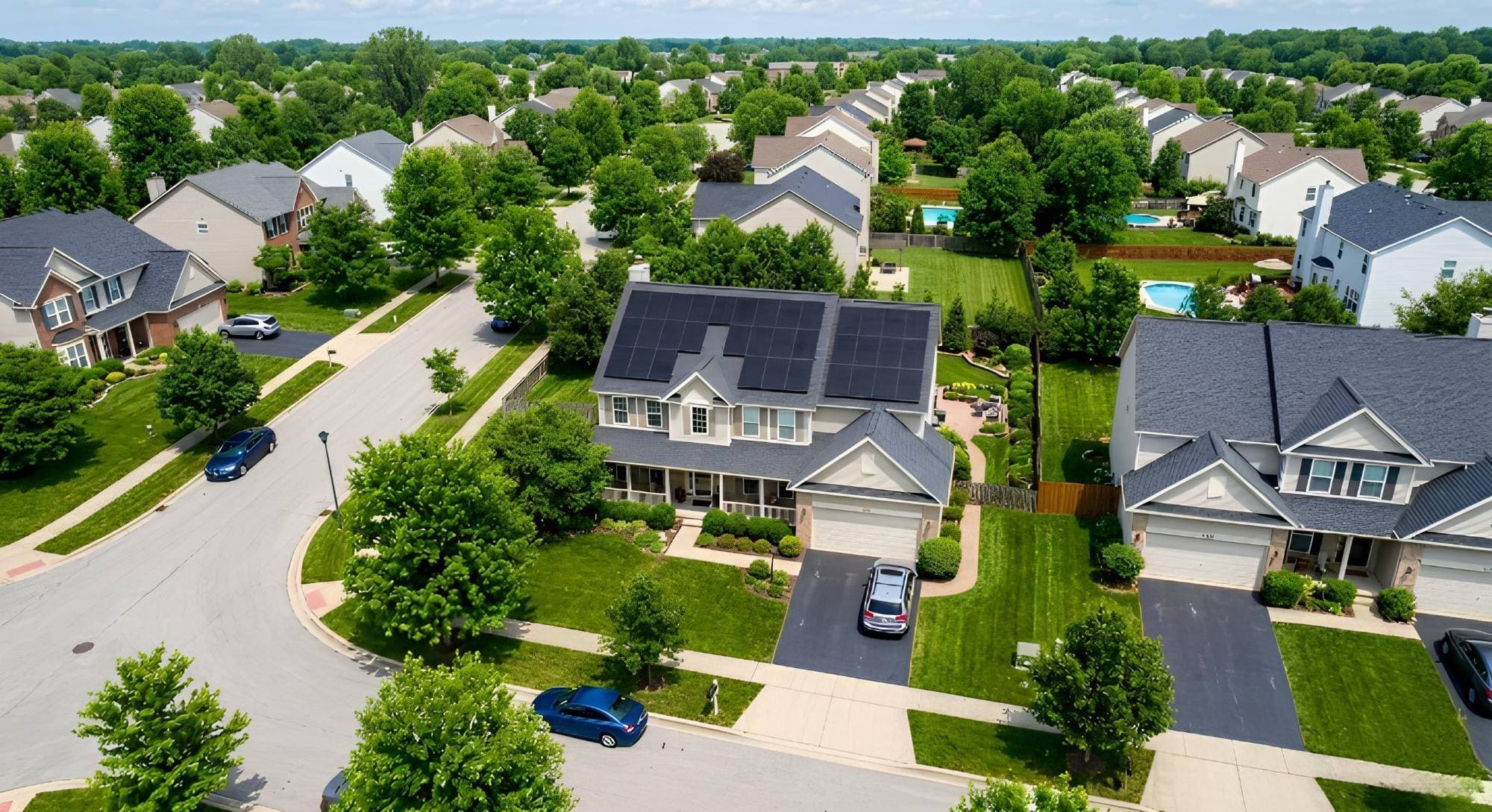
Partial shade from trees cuts solar output, but it rarely rules solar out. Ask your installer for a shade report on each roof plane, consider microinverters or optimizers, and check your village's tree rules before cutting anything: several North Shore towns require a permit to remove trees about 8 inches across or larger. If the roof is too shaded, a ground mount or community solar can work instead.
How much does tree shade cut solar output?
It depends on how much of the day the shade falls on the panels. The U.S. Department of Energy notes that shading rooftop solar, even partially, directly affects how well it works, and that a roof with heavy tree cover may not be the best place for panels.
Panel-level electronics help. In a National Renewable Energy Laboratory study of 542 home systems with power optimizers, partial shading cut output by an average of 8.3%; NREL estimated the loss would have been about 13% without the optimizers. In an earlier NREL test of identical 8 kW arrays, microinverters produced 3.7% more than a string inverter under light shade, 7.8% more under moderate shade and 12.3% more under heavy shade. See microinverters vs. string inverters.
How do installers measure shade on my roof?
Most start with design software that models your roof and nearby trees from aerial imagery or LIDAR, then may confirm it on site. The result is usually a solar access figure for each roof plane: the share of the sun's energy that plane would get with no shade at all.
Some other states' incentive programs require about 75% to 80% solar access before they pay for a system. We haven't found an Illinois Shines shade minimum, but ask every installer for the solar access number on each plane and the production estimate that comes with it. If two quotes show very different production for the same roof, ask why. See how to read a solar quote.
Do I need a permit to cut down trees for solar?
In many North Shore towns, yes, even on your own property. Rules we found:
| Town | When a permit is needed |
|---|---|
| Highland Park | Any tree 8 inches or more in diameter, measured about 4.5 feet up, or 15 inches combined for multi-stem trees; heritage trees go to the Zoning Board of Appeals |
| Glencoe | Any tree 8 inches or more in diameter, even if it's diseased or hazardous, unless it has already fallen |
| Deerfield | Protected trees: 8 inches or more at breast height, or 15 inches combined for multi-stem trees |
| Wilmette | Oaks and hickories 10 inches and up, and any tree 20 inches and up; the 2022 ordinance set a $1,000 fee or two replacement trees for a 10- to 12-inch tree |
| Lake Forest | Per the city's forestry FAQ, front or side yard trees over 10 inches and backyard trees 18 inches or larger |
Rules and fees change, so call your village's forestry or public works department before you plan around a removal. Trees on a neighbor's lot are theirs, and one whose trunk sits on the property line is jointly owned.
Should I trim or remove trees for solar panels?
Try trimming first. Trees on the south side of the house matter most for solar, because that's where the sun is most of the day; trees to the west help cool the house on summer afternoons. University of Illinois Extension estimates that two trees shading the west side of a home can cut cooling costs by up to 30%, and the Department of Energy says shading an air conditioner can raise its efficiency by as much as 10%.
- Hire a certified arborist. The International Society of Arboriculture advises removing no more than 25% of a tree's crown at once, and less for mature trees. Topping is the most harmful pruning practice.
- Watch the calendar for oaks. University of Illinois Extension says not to prune oaks from March through October, to avoid spreading oak wilt.
- Plan for growth. Panels stay up for decades, so ask how much a tree will grow over that time.
What if my roof is too shaded for solar?
- Ground mount. A sunny spot in the yard can outproduce a shaded roof. See ground-mount vs. roof-mount solar.
- Detached garage or barn. A separate roof may get more sun. See solar on a detached garage or barn.
- Community solar. You subscribe to a solar farm and get bill credits; the Citizens Utility Board says savings typically run 10% to 20% off the utility's default supply rate. See community solar in Illinois.
- A battery on its own. Shade doesn't matter to a battery, and it can still back up your home in an outage. See a home battery without solar.
How much tree cover does the Chicago area have?
A lot, and it's growing. The Morton Arboretum's 2020 tree census counted about 172 million trees in the seven-county Chicago region, up from 157 million in 2010, while canopy in the city of Chicago fell from 19% to 16%. In Lake County, tree cover ranges from 9% to 62% depending on the community. On a heavily wooded lot, a good shade report is the most important part of any solar quote.
Sources
- U.S. Department of Energy: Homeowner's guide to going solar
- U.S. Department of Energy: Landscaping for shade
- NREL: Partial shading losses and module-level power electronics in 542 residential systems (2015)
- NREL: Performance of microinverters and string inverters under shading (2012)
- City of Highland Park: Forestry
- Village of Glencoe: Resident FAQs
- Village of Deerfield: Tree ordinance
- The Record North Shore: Wilmette finalizes new tree ordinance (March 2022)
- City of Lake Forest: Forestry FAQs
- University of Illinois Extension: Tree selection info sheet
- U.S. Department of Energy: Energy-efficient landscaping (2021)
- International Society of Arboriculture (TreesAreGood): Pruning mature trees
- University of Illinois Extension: Prevent oak wilt from damaging your trees
- Citizens Utility Board: Illinois community solar
- The Morton Arboretum: 2020 Chicago Region Tree Census
- Lake County Journal: Lake County Board advances forestry plan (January 2026)
This guide is general information, not tax, legal or financial advice. Incentive programs change, so confirm current terms with your installer, your utility and a tax professional.